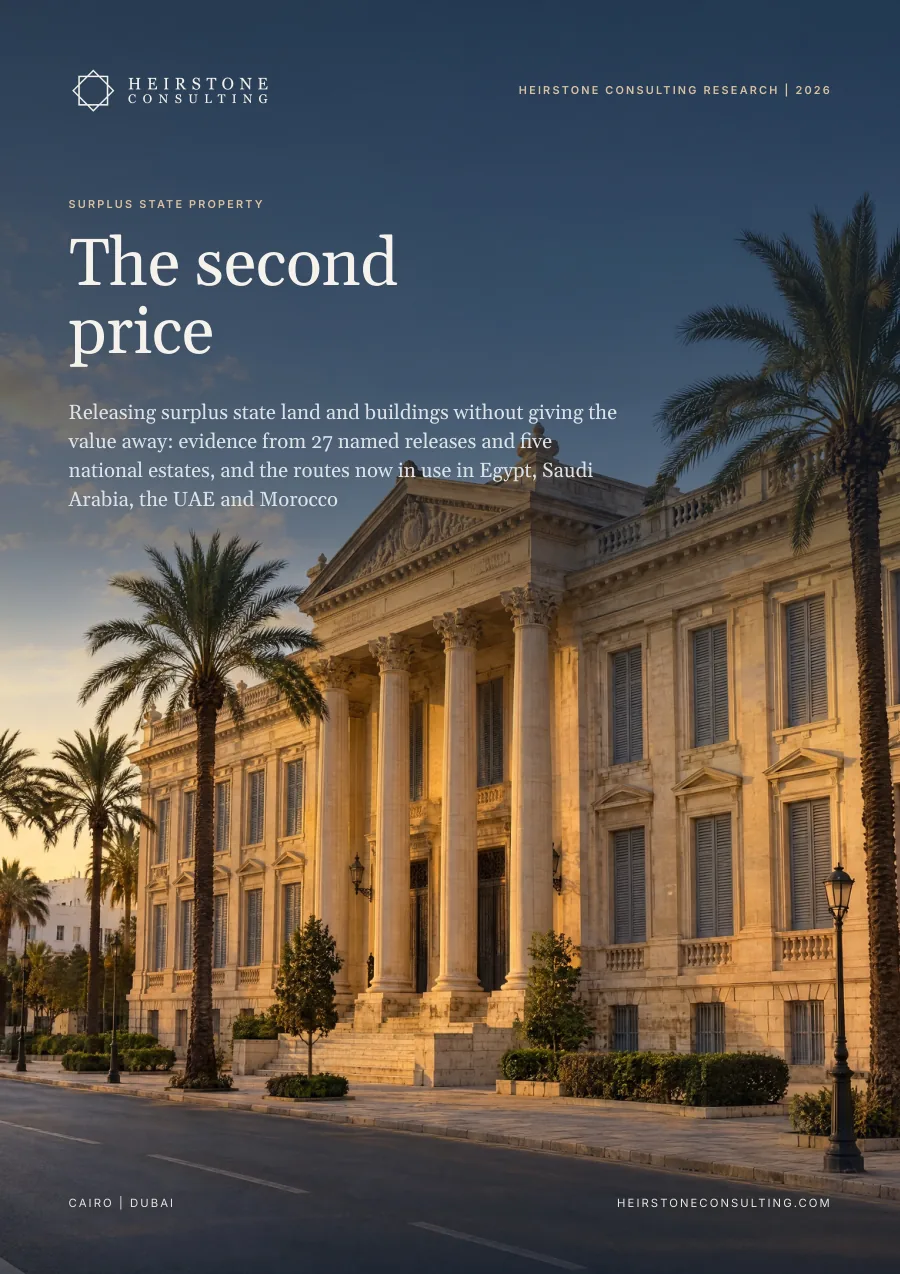
Releasing surplus state land and buildings without giving the value away: evidence from 27 named releases and five national estates, with lessons for Egypt, Saudi Arabia, the UAE and Morocco.

The report in six numbers
of estate value realised from sales in a year by both the UK central estate (2024-25) and the Dutch State property agency (2023). Heirstone analysis
of UK estate running costs covered by a full year of disposal proceeds: £367m against £26.6bn (2024-25)
the price per home the UK Ministry of Defence paid in 2024 to buy back family homes it sold and leased back in 1996
tenders for Hong Kong's Murray Building, offered on a 50-year grant that allowed hotel use only and barred demolition (2013)
mobilised by Morocco through innovative financing from 2019 to mid-2024, much of it by selling public buildings and leasing them back
government employees moved to Egypt's New Administrative Capital by July 2023, leaving central Cairo ministry buildings for release
In brief
We call that later cost the second price: rent on space the state sold but still needs, the running cost of buildings left empty, years without use while a site waits for a partner or a permission, and gains handed to the next owner. In the 27 releases we traced, the largest losses came from these later costs, and each of them can be estimated before the route is chosen.
The UK and Dutch central estates each realised about 0.18% of their value from sales in a year. In 2024-25 a year of UK disposal proceeds paid for about five days of running costs.
The UK Ministry of Defence sold about 55,000 homes in 1996, paid £230m a year to rent them back by 2024, then repurchased 36,347 of them at 5.5 times the 1996 price per home. France sold the Imprimerie nationale for €85m and bought it back four years later for €376.5m.
In our register of 27 releases, buildings took three to sixteen years to reopen once released. Three of the four fastest had the use or the investment fixed at release.
Hong Kong's Murray Building drew 18 tenders and HK$4.4bn for a 50-year grant limited to hotel use, with demolition barred.
Hamburg paid for about half of HafenCity's €3bn of public works from land sales; Copenhagen's By & Havn expects to repay its debt towards 2070.
Egypt vests ministry buildings in its sovereign fund and sold the rights to Ras El Hekma for US$24bn while keeping a 35% stake. Morocco sells public buildings to institutional funds and leases them back, Saudi Arabia reallocates inside government first, and Dubai has floated part of a state-owned REIT.
What it means
Publish a valued register and report holding cost next to receipts every year.
Write use, conservation and a revenue share into the grant, then tender it openly.
Underwrite the occupier's exit date and the planning path as closely as the price.
Inside the full report
Heirstone datasets
named releases in the Heirstone Release Register, from Whitehall to Tahrir Square
lines of the second price in the Heirstone Second Price Test: rent-back, holding, delivery, upside and proceeds
Built from public sources current at October 2026. Every figure is referenced in the report, and figures we derive by combining published numbers are labelled Heirstone analysis.
It is the cost the state carries after a release: rent on space it sold but still needs, running costs of empty buildings, years without use while a site waits, and gains handed to the next owner. In the 27 releases Heirstone traced, these later costs caused the largest losses.
Only if the state will not need the space for long. At the 6.3 to 7% returns reported on Moroccan State leasebacks, rent repays the sale price in 14 to 16 years; the UK Ministry of Defence ended up repurchasing homes at 5.5 times their 1996 price per home.
By fixing the use and conditions in the title before tendering, choosing the release route with its holding and rent-back costs estimated in advance, and using vehicles patient enough to capture land value over decades.
Real Estate Strategy
Speak directly with a senior partner about your project, asset or programme.
Get in Touch